


 PDF Downloads:
200
PDF Downloads:
200


Introduction
Potato (Solanum tuberosum L.) is the third most important non-cereal food crop globally after wheat (Triticum aestivum) and rice (Oryza sativa), with an annual production of approximately 383.08 million metric tons.¹,² In Kenya, potato ranks second after maize (Zea mays) in terms of consumption and contribution to food security. The crop is cultivated by approximately 800,000 smallholder farmers and supports over 2 million people along the value chain. In 2022, national production was estimated at 1.8 million tonnes, valued at approximately USD 394 million.³ Potato is widely grown across diverse agro-ecological zones, with major production occurring in Nyandarua, Kirinyaga, Meru, Nakuru, and Kiambu counties.⁴ Nutritionally, potato is an important source of carbohydrates (20.43%), protein (1.76%), and essential minerals, including iron, zinc, calcium, and thiamine. Increasing population growth and urbanization have contributed to rising global demand and production of potato.⁵ To enhance productivity, several improved varieties, including Kenya Mpya, Shangi, Sherekea, Markies, Eldo Amani, and Unica, have been released and adopted by farmers.
Despite its significance, potato production in Kenya is constrained by poor seed quality, pests, diseases, and limited access to inputs.⁴ Among the major biotic constraints are potato cyst nematodes (PCN), Globodera rostochiensis and Globodera pallida, which are among the most economically important pests of potato.⁶ These nematodes are primarily disseminated through contaminated soil, infected tubers, and farm machinery. They are obligate sedentary endoparasites capable of surviving in soil for up to 3 decades in the absence of a host, posing a persistent threat to potato production. PCN infestation can result in yield losses of up to 80% due to damage to root systems, which are critical for water and nutrient uptake and tuber development.⁷
The life cycle of PCN is closely synchronized with the host plant. Juveniles hatch from eggs in response to chemical stimuli present in potato root exudates, which contain compounds that specifically induce hatching.⁸ The juveniles penetrate root tissues and establish specialized feeding structures (syncytia), which serve as nutrient sources for their development. Following several developmental stages, the nematodes reproduce, and females form cysts that protect eggs in the soil, ensuring long-term survival and persistence of the pest.
Management of PCN has traditionally relied on chemical nematicides such as fosthiazate and oxamyl. Although effective, their use is increasingly restricted due to environmental concerns, potential health risks, and the development of resistance.⁹,¹⁰ Consequently, there is a growing need for sustainable and environmentally friendly management strategies. Cultural practices such as crop rotation with non-host crops can reduce nematode populations; however, their effectiveness is often limited when used as a sole control measure.¹¹ Trap cropping, for instance using Solanum sisymbriifolium, stimulates nematode hatching without supporting reproduction, thereby reducing soil populations over time.¹² The use of resistant varieties also represents a sustainable approach, particularly when integrated with regular soil monitoring and appropriate crop rotation strategies.¹⁰,¹³
Biological control has emerged as a promising alternative for the management of plant-parasitic nematodes. This approach involves the use of natural antagonists, including fungi and botanical products, to suppress nematode populations and reduce reliance on synthetic pesticides.¹⁴ For example, Paecilomyces lilacinus produces hydrolytic enzymes that degrade nematode eggshells, while Trichoderma viride enhances plant defense mechanisms and improves soil health.¹⁵,¹⁶ Botanical products such as polysulphides and neem-based formulations (e.g., Nimbecidine) have also demonstrated efficacy in disrupting nematode development and reproduction.¹⁰,¹⁷,¹⁸ Evaluation of these biocontrol agents under controlled conditions is essential for developing effective integrated management strategies.
Therefore, this study aimed to evaluate the effectiveness of selected biocontrol agents—Maytech, Nemguard, Nimbecidine, and Trichoderma in reducing PCN populations and improving potato growth and yield under screenhouse conditions. The findings are expected to contribute to the development of sustainable nematode management strategies that enhance potato productivity while minimizing environmental impacts.
Materials and methods
Experimental procedure
The experiment was set up in a screenhouse at Kenya Plant Health Inspectorate Service, (KEPHIS) Lanet, Nakuru County located at 0̊ 17’’43.6’S 36̊ 11’’ 3.7’E. Lanet is 16 km Southeast of Nakuru town and experiences a bimodal rainfall pattern with an annual mean of 800 mm. The minimum and maximum temperatures are 10 and 26 °C, respectively.19
Shangi variety was selected for this study due to its known to be susceptible to potato cyst nematodes (PCN) and cultivated by many farmers in potato growing regions in Kenya. Soil was sampled from an infested paddock in 2 farms in Ndundori, Nakuru County using a 10 m × 10 m grid was dug to a depth of 15 cm after removing topsoil and 10 kg was weighed. The soil was placed in a polyethylene bag in a cool box and transported to KEPHIS laboratory for cyst isolation, identification and quantification. Soil samples were air dried at 37oC for 48 hours to aid flotation of cysts which improves efficiency of recovery.20 Cysts were then extracted from 100 g sub-samples of soil using the Fenwick Can flotation method.21 The cysts were individually handpicked using sterile entomological forceps and counted using a Leica MZ 12.5 dissecting microscope and recorded.
At the screen house, the experiment was conducted in polythene plastic pots measuring 30 cm in diameter filled with 2 kg autoclaved soil (Sandy: Loam = 1:3). Four biocontrol agents and a control were used as treatments (Table 1). The application rate for each of the treatments followed manufacturers’ recommendations.
Table 1: Treatments for the evaluation of the bio control agents
| Treatments | Treatments combinations |
| T1 | Paecilomyces lilacinus at 125g/ha (10 g/pot)/Nemguard |
| T2 | Polysulphides (botanical extracts)8l/ha (8 g/pot)/Maytech |
| T3 | Trichoderma viride at 125 g/ha (10 g/pot)/Trichoderma |
| T4 | Nimbecidine at 2 kg/ha (Pesticide) (10g/pot)/Nimbecidine |
| T5 | Untreated control |
The treatments were applied as a soil drench to ensure uniformity within the pot and allowed to settle for 24 hours. One tuber of the Shangi variety, was sown in each pot, including the control (Without bio-control). The DAP fertilizer (18:46:0) was applied at planting at the rate of 25 g per 2 kg of soil. Two weeks after emergence, each pot was inoculated with 30 cysts of PCN. The pots were then arranged in a Randomized Complete Block Design (RCBD) with 3 replicates, over 2 cycles. All good agronomic practices were carried out to ensure the experiment’s uniformity and minimize errors. Data was collected on growth parameters, yield and yield components. Plant height was determined by measuring the plants in the pot using a 1 m ruler from the base to the tip of the plant, number of stems were also counted and averaged, and the number of leaves at 75 days after planting was determined by counting leaves from each plant and averaged. Data on tuber yield, number, and weight were recorded at the time of harvest from each pot.
Data collection on PCN infestation symptoms was assessed visually on a scale of 1 (less severe) to 5 (high severe). The initial cyst population (pi) before planting and the final cyst population (FCP) after harvest, 90 days after planting were determined from each pot. The cysts were extracted from 100 ml soil by Fenwick can method,21 and the nematode reproduction factor (RF) was estimated as the ratio of the final and initial nematode population.
Data analysis
Data on the agronomic parameters was subjected to analysis of variance (ANOVA) using SAS to determine the statistical significance at P≤ 0.05 following a linear model for a completely randomized design. Mean separation was done using Fischer’s least significant difference test (LSD) whenever the treatments were significant.

Where α is the significance level, MSE is the mean square error, and r is the number of replicates.
Correlation coefficients will be derived using Pearson’s formula to determine the relationship between potato agronomic traits and PCN severity.

Where is Pearson’s correlation coefficient, n is the number of samples, x is the dependable variable, and y is the independent variable. The correlation coefficients were derived using SAS version 9.2. A probability level of ≤0.05 was considered statistically significant.
The relationship between the final number of cysts, PCN reproductive index and tuber yield was determined using correlation analysis. The PCN cyst reproduction index was expressed as.22

Where; Pi=initial population density, Pf=final population density. The relative yield loss for each treatment was determined as described.23
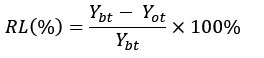
Where; is the mean total yield of the best experimental treatment in the experiment, : is the mean yield of other experimental treatments.
Results
All the treatments were significantly different from control in terms of plant vigor. Nemguard, Nimbecidine and Trichoderma were significantly different from Maytech and control in terms of number of stems (Figure 1). Best root structure was observed in control while Trichoderma enhanced plant height although did not differ statistically from all the other treatments. Trichoderma had a significantly high number of marketable tubers but did not differ from Nimbecidine and Control.
Treatments performance on number of nonmarketable tubers and total number of tubers did not differ statistically (Figure 1). Weight of marketable tubers interestingly varied among the treatments with Nimbecidine registering highest weight while Nemguard registered the least weight but did not differ from Control. The least weight of nonmarketable tubers was observed on Control while Nimbecidine registered the highest weight of total tubers however it was not significantly different from Trichoderma.
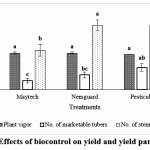 |
Figure 1: Effects of biocontrol on yield and yield parameters. |
Control = Untreated, Maytech =Polysulphides (botanical extracts) 8l/ha, Nemguard= Paecilomyces lilacinus at 125g/ha, Pesticide = Nimbecidine at 2 kg/ha, Trichoderma= Trichoderma viride at 125 g/ha
Effect of biocontrol on the weight of total tubers, final PCN count and reproductive index
Pesticide registered no weight loss at 0% while Nemguard had highest weight loss at 67.91% (Table 2). The differential final PCN count was exhibited by number of final PCN count in control, where Maytech, Nemguard, Pesticide and Trichoderma had 63.78%, 66.14%, 76.38 and 65.35% reduction in final PCN count as compared to the control. Further, the rate of cysts reproduction reduced significantly with application of the biocontrols. From the results, Maytech, Nemguard, Pesticide and Trichoderma resulted in 66.8%, 20%, 86.8% and 66.8%, respectively reduction in cysts reproduction (Table 2).
Table 2: Effect of biocontrol on tuber weight and PCN parameters
| Biocontrols | Weight of total tubers | Relative yield loss (%) | Final PCN count/200g of soil | %change | Reproductive index | %change |
| Control (No Biocontrol) | 0.20 | 43.72 | 21.17 | 0.00 | 0.00 | 0.00 |
| Maytech (Polysulphides) | 0.17 | 52.56 | 7.67 | 63.78 | 0.83 | 66.80 |
| Nemguard (Paecilomyces lilacinus) | 0.12 | 67.91 | 7.17 | 66.14 | 2.00 | 20.00 |
| Pesticide (Nimbecidine) | 0.36 | 0.00 | 5.00 | 76.38 | 0.33 | 86.80 |
| Trichoderma | 0.30 | 16.28 | 7.33 | 65.35 | 0.83 | 66.80 |
Control = Untreated, Maytech =Polysulphides (botanical extracts) 8l/ha, Nemguard= Paecilomyces lilacinus at 125g/ha, Pesticide= Nimbecidine at 2 kg/ha, Trichoderma= Trichoderma viride at 125 g/ha
Effect of biocontrol on the agronomic and yield parameters of shangi cultivar
Cycle 1 and 2 showed significance (p≤0.01, p≤0.001) in weight of marketable tubers, weight of nonmarketable tubers, total weight of tubers and PCN with juveniles (Table 3). Treatments had significant (p≤0.05, p≤0.01, p≤0.001) effects on plant vigor, number of marketable tubers and FPCN/200g of soil and PCN with juveniles. Interaction effects of Cycle x Treatment showed significant effects (p≤0.05, p≤0.001) on plant vigor, number of marketable tubers, FPCN/200g of soil and PCN with juveniles (Table 3).
Table 3: Mean squares for agronomic and yield parameters of shangi cultivar under 5 biocontrol agents
| Source of variation | d.f | Vigor | Number of stems | Root structure | Plant height | No. of Marketable tubers | No. of Nonmarketable tubers | Total number of tubers |
| Cycle | 1 | 0.03 | 1.63 | 0.0 | 2.70 | 8.53 | 1.63 | 2.70 |
| Replicate | 2 | 0.01 | 7.03 | 0.01 | 321.03 | 0.63 | 4.8 | 5.83 |
| Treatment | 4 | 0.78*** | 9.13 | 1.11 | 75.95 | 3.78** | 9.28 | 11.47 |
| Cycle x Treatment | 4 | 0.28*** | 1.47 | 0.19 | 239.78 | 3.28* | 7.05 | 11.37 |
| Error | 18 | 0.036 | 2.29 | 0.04 | 195.84 | 0.74 | 9.99 | 13.43 |
| R2 | 0.87 | 0.58 | 0.89 | 0.35 | 0.74 | 0.30 | 0.30 | |
| C.V | 4.7 | 23.06 | 10.76 | 20.27 | 40.44 | 73.49 | 56.96 |
*, **, ***, significant at (p≤0.05), (p≤0.01), (p≤0.001), respectively. R2=Coefficient of determination, CV= Coefficient of variation, df= degree of freedom.
Table 3: Cont..,
| Source of variation | d.f | Weight of marketable tubers | Weight of non-marketable tubers | Total weight of tubers | FPCN/200g of soil | PCN with juveniles |
| Cycle | 1 | 0.51*** | 0.03** | 0.81*** | 4.80 | 24.30*** |
| Replicate | 2 | 0.01 | 0.00 | 0.00 | 2.03 | 0.70 |
| Treatment | 4 | 0.02 | 0.02 | 0.06 | 254.58*** | 4.95* |
| Cycle x Treatment | 4 | 0.03 | 0.01 | 0.06 | 50.55*** | 5.55* |
| Error | 18 | 0.01 | 0.00 | 0.02 | 3.51 | 1.48 |
| R2 | 0.78 | 0.71 | 0.80 | 0.95 | 0.72 | |
| C.V | 59.13 | 97.68 | 58.77 | 19.39 | 93.51 |
*, **, ***, significant at (p≤0.05), (p≤0.01), (p≤0.001), respectively. R2=Coefficient of determination, CV= Coefficient of variation, df= degree of freedom.
Effect of biocontrol on potato cyst nematode reproductive index
All the biocontrol significantly inhibited cyst reproduction in comparison with the control. Pesticide (Nimbecidine) (RI=0.33) was the best but not significantly different in controlling cyst reproduction compared to Trichoderma (RI=0.83) and Maytech (RI=0.83). Interestingly, although Nemguard performed better than control they did not differ statistically (Figure 2).
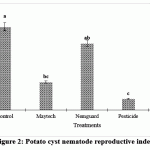 |
Figure 2: Potato cyst nematode reproductive index. |
Control = Untreated, Maytech =Polysulphides (botanical extracts) 8 l/ha, Nemguard= Paecilomyces lilacinus at 125g/ha, Pesticide= Nimbecidine at 2 kg/ha, Trichoderma= Trichoderma viride at 125 g/ha
The differential final PCN count was exhibited by number of final PCN count in control, where Maytech, Nemguard, Pesticide and Trichoderma had 63.78%, 66.14%, 76.38 and 65.35% reduction in final PCN count as compared to the control. Further, the rate of cysts reproduction reduced significantly with application of the biocontrols. From the results, Maytech, Nemguard, Pesticide and Trichoderma resulted in 66.8%, 20%, 86.8% and 66.8%, respectively reduction in cysts reproduction (Table 2). Highest FPCN was observed under the control while pesticide registered the least FPCN. Further, control had significantly the highest PCN with juveniles but did not differ from Nemguard with pesticide exhibiting the least PCN with juveniles (Figure 3; Table 4).
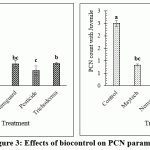 |
Figure 3: Effects of biocontrol on PCN parameters. |
Control = Untreated, Maytech =Polysulphides (Botanical extracts) 8l/ha, Nemguard= Paecilomyces lilacinus at 125g/ha, Pesticide= Nimbecidine at 2 kg/ha, Trichoderma= Trichoderma viride at 125 g/ha.
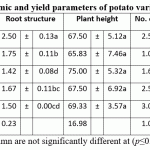 |
Table 4: Means for the agronomic and yield parameters of potato varieties under 5 biocontrol agents |
Means followed by the same letters down the column are not significantly different at (p≤0.05).
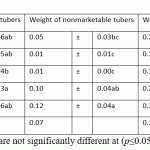 |
Table 4: Continue…, |
Means followed by the same letters down the column are not significantly different at (p≤0.05).
In pearson correlation, the reproductive index had a negative relationship (r=-0.68) with weight of total tubers (Figure 4). Reproductive index decreased at a rate of 6.24 with increase in weight of total tubers. Final PCN count/ 200g of soil had a negative correlation with the weight of total tubers. Further, the weight of total tubers increased with decrease in Final PCN/200g of soil at a rate of 17.45. On the other hand, a negative relationship was observed between PCN with juveniles and weight of total tubers with PCN cyst count of decreasing at the rate of 6.23 with an increase in weight of total tubers (Figure 4).
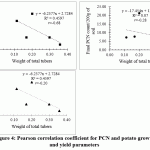 |
Figure 4: Pearson correlation coefficient for PCN and potato growth and yield parameters |
Plant vigor showed negative significant relationship with root structure (r=-0.96**) and FPCN/200g of soil (r=-0.93*) (Table 5). The number of stems and FPCN/200g of soil also had a negative significant (r=-0.18*) relationship. PCN with juveniles showed a significant negative correlation with the number of nonmarketable tubers (r=-0.97**) and the total number of tubers (r=-0.89*). Weight of total tubers showed positive significant correlation with weight of marketable tubers (r=0.92*) and weight of nonmarketable tubers (r=0.92*) (Table 5).
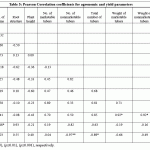 |
Table 5: Pearson Correlation coefficients for agronomic and yield parameters |
*, **, ***, significant at (p≤0.05), (p≤0.01), (p≤0.001), respectively.
Discussion
Biocontrols; Nemguard, Maytech, Trichoderma, and Trichoderma significantly influenced the reduction in rate of reproductive index for the cysts. This suggests that they were effective in PCN control. When compared to the negative control which did not have any treatment the reproductive index (RI) was significantly higher. According to researcher24 biocontrol agents significantly reduce the reproductive index of potato cyst nematodes. Further, it reduces egg density and multiplication rates of up to 86%. Among the biocontrol agents, pesticide was the most effective with 86% reduction in RI followed by Trichoderma and Maytech (66%).25 The biocontrols might have altered the production of exudates which are the basis for signaling of nematodes to attack the potato roots. This inhibition of cyst reproduction means reduced PCN population in the field and reduced severity on plants. This is evident in this study where biocontrol resulted in 63-76% reduction in PCN population/200g of soil.
Growth and physiology of plants is interrupted by biotic and abiotic stresses resulting in reduced production. RI increased with decrease in weight of total tubers. Similarly, the results showed that the final PCN count/ 200g of soil increased with a decrease in weight of total tubers26 found out that, tuber weight significantly reduced 44%-87% with increased PCN population and number of PCN eggs. PCN has been a pest of importance in potato growing regions of Kenya. From the results of this study, it is evident that the effects of PCN are detrimental to potato production. PCN significantly inhibited plant vigor which is a major trait that determines production. Furthermore, the number of stems in potato growth and establishment influences tuber production. PCN significantly reduced the number of stems in the infected potato plants. Interestingly, biocontrols did not have significant effects on plant height. However, control had moderate plant height which might be due to redirection of assimilates to root structure rather than the shoot. It is worth noting that control plots had higher root density compared to the biocontrols agents. This is in line with27 who reported higher root density in potato infested by PCN. This might be due to production of extra roots when infested as a defense response. Control had the least plant vigor, but higher root structure compared to the rest of the treatments. In disease susceptibility interactions, a cultivar might reduce plant above ground growth and invest more in root lignification or branching, improving root resilience to pests and diseases.
Trichoderma was the most effective agent in increasing the number of marketable tubers and total number of tubers. Pesticide performed better in terms of the weight of marketable tubers and total weight of marketable tubers. This is a true reflection of the effects of biocontrols in suppressing PCN. The reduction in nematode population density decreases root damage and nutrient uptake disruption, allowing better root development and higher tuber formation, which translates into more marketable tubers. It is evident from the results that biocontrols had significantly lower final PCN count/200g of soil. Similar observation was realized in the PCN count with juveniles in plots with biocontrols as compared to those without biocontrol. The plots with biocontrols registered reduced PCN juvenile population which further contributed to increased yield production.
Plant vigor correlated with increase in weight of marketable tubers and number of marketable tubers. This is in agreement with28 who reported that potato clones with higher plant vigor have higher tuber yield. The treatment with PCN/200g of soil had significantly increased with a decrease in number of plant stems. Potato infestation in potato fields causes root damage that leads to stunted and weakened plants, which results in fewer stems per plant. Detrimental effects on plants reduce plants’ ability to absorb water and nutrients efficiently which causes reduction in plant vigor and growth.29 This is in line with the results from this study where plant vigor has a significant negative correlation with FPCN/200g of soil. Potato cysts infect feeder roots, where the females attach, feed and become sedentary. Increased number of nematodes cause plant wilting, stunted growth and poor root development.
Plant root structure was negatively correlated with the marketable tubers. This might be due to redirection of assimilates to the root structure to repair and protect the roots which are infected by the cysts. PCN juveniles induce the formation of a large, multinucleate feeding site called a syncytium by dissolving cell walls and fusing neighboring root cells.8 This syncytium acts as a strong nutrient sink; drawing assimilates from the plant to support nematode development. The nematode manipulates host cells to maintain this feeding site, which requires continuous supply of nutrients and assimilates from the plant’s photosynthate pool.8 These trade-offs might be the reason for the negative effects observed between the two traits. Higher or dense root systems improve nitrogen, water and nutrient absorption which contribute to tuber development.
Moreover, plant vigor and root structure had negative correlation which might be due to the investment in shoot growth at the expense of root development. Strong dense root systems might grow slower, however, establish long-term resilience. This is in concurrent with30 who reported that root mass is negatively correlated with tuber bulking implying an increase in root growth may not enhance plant vigor. Infected plants are weakened, chlorotic, premature drying and wilting of above ground vegetation. This inhibits photosynthesis, nutrients and assimilates storage and poor tuber initiation and development. Researcher31 reported an increase in number of PCN juveniles resulted in 40%, 32%, 40%, and 70% reduction in plant height, fresh weight, dry weight and yield per plant antithesis to the control.
In this study, plant height had a negative influence on tuber yield. This might be due to the redirection of assimilates to sinks rather than structural parts of the plant. Tall plants redirect most of the resources to vegetative growth rather than tuber bulking. Further, excessive shading may reduce photosynthesis on lower plant leaves, and delayed tuber initiation. Biocontrol is a reputable and increasingly adopted approach for suppressing PCN in soils, offering environmental and sustainability benefits. However, despite the effectiveness observed in this study, several limitations of biocontrol agents should be considered to provide a balanced interpretation. Biocontrol agents such as Nemguard, Maytech, and Trichoderma typically exhibit a slower mode of action compared to chemical pesticides and may require multiple application cycles to achieve substantial suppression of PCN populations. In addition, their performance can be inconsistent across different field conditions. Environmental factors including soil moisture, temperature, solar ultraviolet radiation, and soil microbial composition strongly influence their survival, establishment, and efficacy. These constraints may result in variable outcomes under farmer field conditions and should be taken into account when recommending their use.32,33
Therefore, East Africa potato farmers can use the recommended biocontrols in this study by implementing them under natural field conditions and give recommendations on optimization of the timing and frequency of biocontrol agent applications.34,35 However, due to long use of biocontrol to completely eliminate the PCN in the soils, integrating biocontrol with potato‑friendly agro‑ecological practices such as crop rotation, use of trap or refugia crops, and minimized broad‑spectrum insecticide use farmers create more favorable habitats for natural enemies and microbial agents, thereby improving their establishment and impact on key pests such as aphids, tuber moths, and root‑knot nematodes.34-36 Furthermore, farmer‑generated data on pest pressure, tuber yield, and input costs provide valuable on‑farm evidence on economic feasibility and scalability, which strengthens the applied value of the research and supports more realistic extension recommendations.34,36
Conclusion
Nemguard, Trichoderma, Mytech and Nemguard offer a sustainable, ecofriendly and cost-effective solution for managing potato cyst nematode. This study has shown the effectiveness of biocontrol in reducing PCN reproductive index and population. Pesticide and Trichoderma were the most effective in suppressing PCN reproduction. Biocontrol significantly suppressed PCN juvenile population which contributed to increased number and weight of marketable tubers. Managing PCN effectively requires combining multiple strategies starting with prevention, then intergrating cultural, biological and chemical controls, tailored to local conditions, alongside proper timing, application techniques, and environment management. This intergrated pest management approach maximizes efficacy while minimizing environmental impact.
Acknowledgements
We thank Kenya Plant Health Inspectorate Service for providing the screenhouse and laboratory to conduct the research.
Funding Sources
This research was supported by Erasmus+ BREEDTECH project number 101128862
Conflict of Interest
The authors do not have any conflict of interest.
Data Availability Statement
This statement does not apply to this article.
Ethics Statement
This research did not involve human participants, animal subjects, or any material that requires ethical approval.
Informed Consent Statement
This study did not involve human participants, and therefore, informed consent was not required.
Permission to reproduce material from other sources:
Not Applicable.
Author Contributions:
Miriam Karwitha Charimbu, Joseph Juma Mafurah and Milka Mbithe Kananda: Conceptualization, Methodology, Data collection, Analysis, Writing, and Final approval of the manuscript.
References
- Food and Agriculture Organization of the United Nations. FAOSTAT: Crops and livestock products. Rome, Italy: FAO; 2023.
- Kaguongo W, Nyangweso A, Mutunga J, et al. A policymakers’ guide to crop diversification. Rome, Italy: Food and Agriculture Organization of the United Nations; 2013.
- Kenya – potato – market analysis, forecast, size, trends and insights. 2025. Available from: https://www.indexbox.io/search/production-potato-kenya/
- Kwambai TK, Struik PC, Griffin D, et al. Understanding potato production practices in north-western Kenya through surveys: an important key to improving production. Potato Research. 2022. https://doi.org/10.1007/s11540-022-09599-0
CrossRef - Birch PR, Bryan G, Fenton B, et al. Crops that feed the world 8: potato: are the trends of increased global production sustainable? Food Security. 2012;4(4):477–508.
CrossRef - Mburu H, Cortada L, Haukeland S, et al. Potato cyst nematodes: a new threat to potato production in East Africa. Frontiers in Plant Science. 2020;11:670.
CrossRef - Ochola J, Cortada L, Ng’ang’a M, Hassanali A, Coyne D, Torto B. Mediation of potato–potato cyst nematode (Globodera rostochiensis) interaction by specific root exudate compounds. Frontiers in Plant Science. 2020;11:649.
CrossRef - Price JA, Coyne D, Blok VC, Jones JT. Potato cyst nematodes Globodera rostochiensis and pallida. Molecular Plant Pathology. 2021;22(5):495–507. https://doi.org/10.1111/mpp.13047
CrossRef - Chen J, Li QX, Song B. Chemical nematicides: recent research progress and outlook. Journal of Agricultural and Food Chemistry. 2020;68(44):12175–12188.
CrossRef - Pandit MA, Kumar J, Gulati S, et al. Major biological control strategies for plant pathogens. Pathogens. 2022;11(2):273. https://doi.org/10.3390/pathogens11020273
CrossRef - Hague SS, Overstreet C, Van Santen E. Crop rotation effects on nematode populations. In: Making Conservation Tillage Conventional: Building a Future on 25 Years of Research. 2002:156.
- Dandurand LM, Zasada IA, LaMondia JA. Effect of the trap crop Solanum sisymbriifolium on Globodera pallida, Globodera tabacum and Globodera ellingtonae. Journal of Nematology. 2019;51:1–11. https://doi.org/10.21307/jofnem-2019-030
CrossRef - Gartner U, Hein I, Brown LH, et al. Resisting potato cyst nematodes with resistance. Frontiers in Plant Science. 2021;12:661194. https://doi.org/10.3389/fpls.2021.661194
CrossRef - Al-Ani LKT, Aguilar-Marcelino L, Fiorotti J, et al. Biological control agents and their importance for plant health. In: Microbial Services in Restoration Ecology. Elsevier; 2020:13–36.
CrossRef - Onditi JO, Whitworth JL. Potato cyst nematodes (Globodera rostochiensis and pallida) as a new challenging problem of potato production in Africa. American Journal of Potato Research. 2025;102(1):1–12.
CrossRef - Navarro MO, Barazetti A, Niekawa ET, et al. Microbial biological control of diseases and pests by PGPR and PGPF. In: Microbial Interventions in Agriculture and Environment. Singapore: Springer; 2019:75–122.
CrossRef - Eder R, Consoli E, Krauss J, Dahlin P. Polysulfides applied as formulated garlic extract to protect tomato plants against the root-knot nematode Meloidogyne incognita. Plants. 2021;10(2):394.
CrossRef - Ayaz M, Zhao JT, Zhao W, et al. Biocontrol of plant parasitic nematodes by bacteria and fungi: a multi-omics approach for the exploration of novel nematicides in sustainable agriculture. Frontiers in Microbiology. 2024;15:1433716. https://doi.org/10.3389/fmicb.2024.1433716
CrossRef - Jaetzold R. Farm management handbook of Kenya. Volume II: Natural conditions and farm management information. Nairobi, Kenya; 2010.
- Wainer J, Dinh Q. Taxonomy, morphological and molecular identification of the potato cyst nematodes Globodera pallida and rostochiensis. Plants. 2021;10(1):184. https://doi.org/10.3390/plants10010184
CrossRef - Fenwick DW. Methods for the recovery and counting of cysts of Heterodera schachtii from soil. Journal of Helminthology. 1940;18(4):155–172.
CrossRef - Van den Berg W, Rossing WAH. Generalized linear dynamics of a plant-parasitic nematode population and the economic evaluation of crop rotations. Journal of Nematology. 2005;37(1):55.
- Robert GD, James HT. A biometrical approach. In: Principles of Statistics. 2nd ed. New York, USA: McGraw-Hill College; 1991.
- Nagachandrabose S. Management of potato cyst nematodes using liquid bioformulations of Pseudomonas fluorescens, Purpureocillium lilacinum and Trichoderma viride. Potato Research. 2020;63(4):479–496.
CrossRef - Seenivasan N, Devrajan K, Selvaraj N. Management of potato cyst nematodes (Globodera) through biological control. Indian Journal of Nematology. 2007;37(1):27–29.
- Jean BC, Dandurand L, Knudsen GR. A predictive risk model analysis of the potato cyst nematode Globodera pallida in Idaho. Plant Disease. 2019;103(12):3117–3128. https://doi.org/10.1094/PDIS-04-19-0717-RE
CrossRef - Mei Y, Thorpe P, Guzha A, et al. Only a small subset of the SPRY domain gene family in Globodera pallida is likely to encode effectors. Nematology. 2015;17:409–424. https://doi.org/10.1163/15685411-00002875
CrossRef - Da Silva A, Carvalho AD, Azevedo FQ. Yield, frying quality, plant vigor and maturity of potato clones. Horticultura Brasileira. 2019;37(1):95–100. https://doi.org/10.1590/s0102-053620190115
CrossRef - Bell CA, Magkourilou E, Urwin PE, Field KJ. Disruption of carbon-for-nutrient exchange between potato and arbuscular mycorrhizal fungi enhanced cyst nematode fitness and host pest tolerance. New Phytologist. 2022;234(1):269–279. https://doi.org/10.1111/nph.17958
CrossRef - Iwama K. Physiology of the potato: new insights into root system and repercussions for crop management. Potato Research. 2008;51(3):333–353. https://doi.org/10.1007/S11540-008-9120-3
CrossRef - Vanitha A, Shanthi P, Mhatre PH, et al. Studies on pathogenicity of potato cyst nematode Globodera rostochiensis and pallida on potato. International Journal of Current Microbiology and Applied Sciences. 2019;8(6):624–630. https://doi.org/10.20546/ijcmas.2019.806.072
CrossRef - De Curtis, F., de Felice, D. V., Ianiri, G., De Cicco, V., & Castoria, R. (2012). Environmental factors affect the activity of biocontrol agents against ochratoxigenic Aspergillus carbonarius on wine grape. International Journal of Food Microbiology, 159(1), 17–24. https://doi.org/10.1016/ j.ijfoodmicro. 2012.07.023
CrossRef - Cheikh Ahmeth Tidiane Dieye, Durand, N., Schorr‐Galindo, S., Strub, C., & Fontana, A. (2023). Impacts of abiotic factors on the growth of three commercial biological control agents, on the growth and mycotoxinogenesis of Fusarium graminearum and on their interaction. Journal of the Science of Food and Agriculture, 104(2), 932–941. https://doi.org/10.1002/jsfa.12991
CrossRef - Settele, J., & Settle, W. H. (2018). Conservation biological control: Improving the science base. Proceedings of the National Academy of Sciences, 115(33), 8241–8243. https://doi.org/10.1073/pnas.1810334115
CrossRef - Jeffers, A., & Chong, J. H. (2021). Biological control strategies in integrated pest management (IPM) programs. Clemson Univ. Cooperative, Land-Grant Press Clemson Ext., LGP, 1111(2021), 1-9.
- United States Department of Agriculture (USDA). https://www.nifa.usda.gov/grants/programs/ biological-control-program. Retrieved on 25th March 2026.
Abbreviations
PCN (Potato cyst nematodes),
ANOVA (Analysis of variance),
FPCN (Final potato cyst nematodes)